
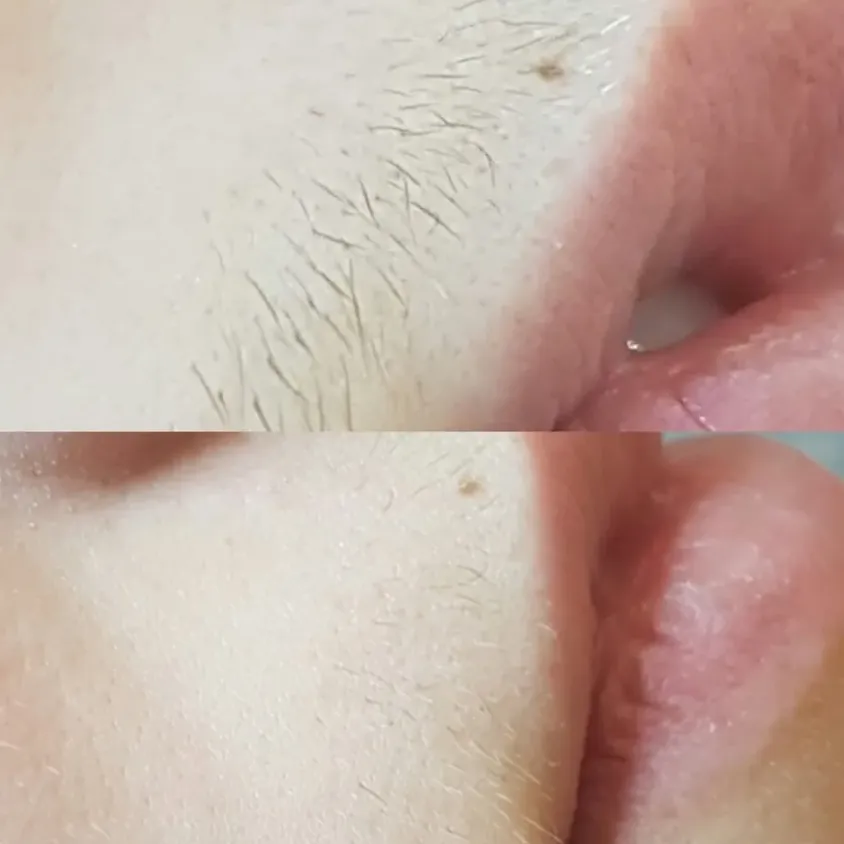
You can switch from laser to electrolysis as soon as you stop booking laser on that area. Electrolysis removes the gray, blonde, red and fine hairs laser leaves behind, one follicle at a time. For a small facial area, plan on 8 to 15 sessions over 9 to 18 months at our Irvine studio, from $50 per session.
Key facts
| Best time to stop laser | Once you see gray, blonde or fine hairs laser did not reduce |
|---|---|
| Wait before electrolysis | No waiting needed in most cases, just no new laser on the area |
| Hair left after laser | Light, fine, gray and stubborn dark hairs |
| Typical course | 8 to 15 sessions over 9 to 18 months for a small facial area, results vary |
| Visit frequency | Weekly or every other week at first, then spaced out |
| Works on | All skin tones and hair colors, including gray and blonde |
| Prices | From $50 for 20 minutes, listed on the prices page |
| New clients | Free consultation, $25 off the first session |
When is the right time to stop laser?
The right time is when your results flatten out and the hairs you still see are not the kind laser can handle. That moment arrives for many people after a full course, and sometimes much sooner.
Laser energy is absorbed by pigment. Dark hair on light skin takes it well. Gray, white, blonde and red hair has little or no pigment to absorb, so the beam passes by. Very fine hair can be skipped as well. If you have finished the sessions your provider recommended and a visible layer is still there, more laser is unlikely to change that.
Watch for these signs that it is time to switch:
- The hairs left are gray, white, blonde or red
- A fuzzy layer of fine hair remains where thick hair used to be
- Hair has become thicker or darker on the edge of the treated area
- New hairs keep showing up after you thought you were finished
- Your skin tone makes your laser provider turn the settings down so far that it no longer works
If you are still in the middle of a laser course and seeing steady progress, finish it. Electrolysis will be there for the leftovers. For a side by side look at both methods, read electrolysis vs laser.
Expert tip from Aida KhazievaBring your laser history to the consultation, including dates and areas. Stop other hair removal on the area so I can see which hairs are left and map the plan.
Licensed cosmetologist and electrologist, 20+ years
How long do you wait between laser and electrolysis?
In most cases you do not have to wait at all. What matters is that you stop laser on the area and that your skin is calm on the day of your visit.
Electrolysis treats each follicle with a fine sterile probe, so it does not depend on skin color or on how recently laser was used. The practical limits are comfort ones. A recent sunburn, broken skin or a strong laser reaction should heal first. Your electrologist will look at the area at your consultation and tell you if a short pause makes sense.
| Situation | Typical advice |
|---|---|
| Laser course finished, hair remains | Book a consultation now |
| Last laser session within the past few days | Wait until redness has faded |
| Skin tanned or sunburned | Let it settle, then book |
| Mid course, good progress | Finish laser first, switch for leftovers |
| Paradoxical growth after laser | Switch to electrolysis right away |
Typical advice, not a promise. Your electrologist confirms the right timing after looking at your skin.
What kind of hair is left after laser?
The hair that remains is the hair laser could not see or could not fully disable. It usually falls into four groups.
Light and gray hair
No pigment means nothing for the beam to grab. These hairs often continue untouched through a whole laser course. See gray and blonde hair removal.
Fine vellus hair
Soft, thin hairs on cheeks, jawline and upper lip are often skipped, which leaves a peach fuzz that makeup shows.
Weakened but alive follicles
Some follicles are damaged enough to grow thinner hair but not enough to stop. That hair returns months later.
Hormonal newcomers
PCOS, menopause and some medications keep waking new follicles. Laser cannot treat a hair that has not appeared yet. See PCOS facial hair.
Each of these is workable with electrolysis because the probe goes into the follicle itself and treats the root, whatever the color of the hair above it. Treated follicles do not grow back. The FDA allows electrolysis to be marketed as permanent hair removal, and it is the only method with that standing.
What does the step plan look like?
The plan has five stages, and the first one costs nothing. Here is how a typical switch runs from the first call to the finish line.
| Stage | What happens | Typical timing |
|---|---|---|
| 1. Pause laser | Stop booking sessions on the area | Day 1 |
| 2. Consultation | 15 minutes, free, patch test and hair assessment | Week 1 |
| 3. Clearing | Visits every 1 to 2 weeks | Months 1 to 3 |
| 4. Thinning | Visits every 2 to 3 weeks | Months 3 to 9 |
| 5. Finishing | Visits every 4 to 6 weeks, then stop | Months 9 to 18 |
A typical plan, not a promise. Aida adjusts it to how your hair responds.
At the consultation, bring what you remember about your laser history: how many sessions, which device if you know it, and the date of the last one. That helps your electrologist map which hairs are likely to be left.
Many clients see a visible change within the first two or three months. Hair that reappears in the early weeks usually belongs to follicles in a different growth stage, and it gets treated on the next pass.
How should you prepare for your first electrolysis visit?
Prepare by letting the hair grow a little and keeping the area free of other hair removal.
- Let hair grow to 1 to 2 mm, about one or two days after shaving
- Stop waxing, threading and plucking at least 3 weeks before
- Skip tanning and sunburn on the area
- Arrive without makeup or sunscreen on the treatment zone
- Write down your laser dates and any skin reactions
Hair has to be present for the probe to follow it to the root. That is why trimming rather than waxing is the rule between visits.
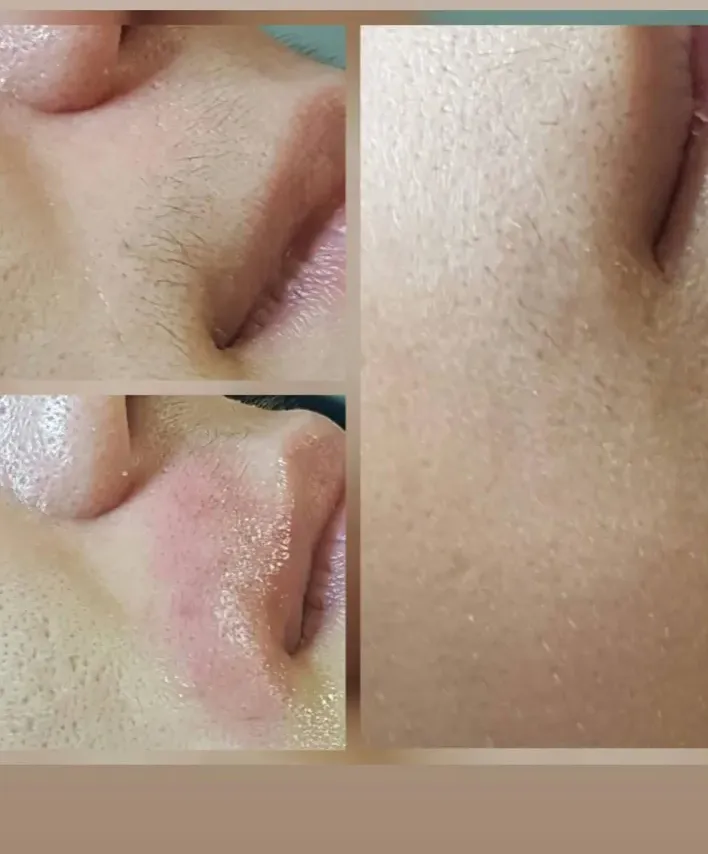
What does it cost to finish with electrolysis?
Pricing is per session, set by the area and the time it takes, and the full list lives on the prices page.
| Area | Time | Price |
|---|---|---|
| Upper lip | 20 min | $50 |
| Chin | 30 min | $65 |
| Face, general zone | 30 min | $75 |
| Cheek, neck, hairline, underarm | 45 min | $90 |
| Bikini | 60 min | $110 |
First-time clients take $25 off. Buy 5 visits and save 10%, or 10 visits and save 15%. Because laser has already removed most of the dark hair, many clients find that the remaining work is a light density that goes faster per visit than they feared.
Start with how electrolysis works if you want the full picture, then compare by reading our Irvine guide to electrolysis.
What does the first month after laser feel like?
The first month feels different from laser mostly because the work is slower and more precise. Laser treats a whole patch in a pass. Electrolysis treats one hair at a time, so a session is a series of small, deliberate steps rather than a single sweep.
You sit reclined, the area is cleansed, and a new sterile probe is opened. The probe slides alongside each hair into the follicle, a short pulse of energy is delivered, and the loosened hair is lifted out with tweezers. You feel a quick sting or a brief warmth. Intensity can be adjusted, and the upper lip is the most sensitive spot while the chin and cheeks are usually easier.
Afterward the skin may look pink with tiny bumps for a few hours. Most clients return to work or errands right away. Small scabs, if any, heal on their own in a few days, and you should not pick them. Daily sunscreen helps the skin recover and keeps pigment even.
| Week | What to expect |
|---|---|
| 1 | Consultation, first treatment, light pinkness for hours |
| 2 to 3 | Second and third visits, some new hairs surface |
| 4 | Fewer hairs per visit, regrowth looks finer |
| 8 to 12 | Many clients notice a visible change |
A typical pattern, not a promise. Results vary.
Does laser leave anything that complicates electrolysis?
Usually not, though three situations are worth knowing about. Each is handled during your consultation, and none is a reason to avoid switching.
- Paradoxical hair growth. Some people see thicker, darker hair at the edges of a laser area. These hairs are still ordinary hairs with ordinary follicles, and electrolysis treats them like any other.
- Pigment changes. Laser can leave lighter or darker patches in some skin. Electrolysis can proceed on the area when the skin is calm, and sunscreen helps even things out over time.
- Scattered survivors. After laser, remaining hairs are often few and far apart. That is good news, because sparse hair means shorter visits and fewer of them.
The one thing that does slow a switch is waxing or plucking between visits. If you have done that for years, follicles can be bent or distorted, which makes the probe work harder. That is no reason to stay away, but it is a reason to start sooner and keep to the plan.
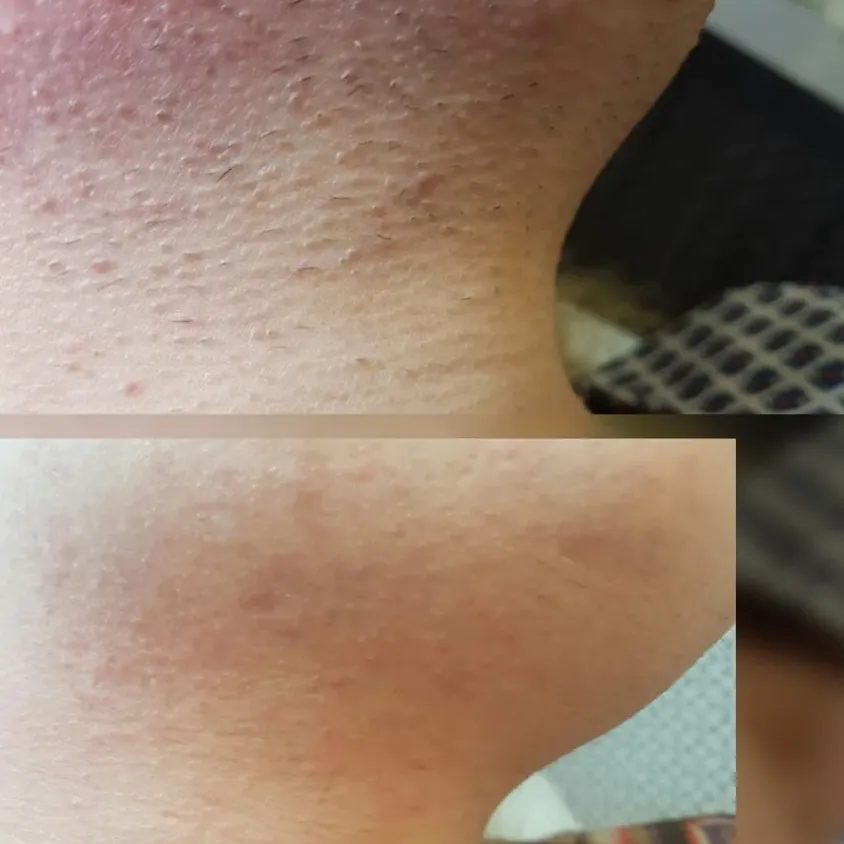
Should you finish laser first, or switch now?
Switch now if your remaining hair is light, fine or hormonal, and finish laser first if you still see steady progress on dark hair. The two choices depend on what you are looking at in the mirror today.
| What you see | Best move |
|---|---|
| Dark, coarse hair that is still thinning | Finish the laser course |
| Gray, white, blonde or red hairs | Switch now |
| Fine fuzz after several sessions | Switch now |
| Thicker hair at the edges of the treated area | Switch now |
| New hairs every few months | Switch now and see a doctor about hormones |
A few clients ask whether they should keep laser as a backup. We suggest not mixing methods on one area. Every laser pulse needs pigment to work with, and electrolysis needs hairs that are still present to follow. Pick one method per area and give it a full course. Hair that was removed by laser and stayed away is a success. Hair that stayed is the electrolysis case.
What mistakes slow down a switch?
Four habits cause most delays, and all four are easy to fix.
- Waxing or plucking between visits, which removes the hair the probe needs
- Skipping appointments in the clearing phase, when weekly visits do the most work
- Treating the same area with laser and electrolysis at once
- Stopping early because the first months look patchy, when that is normal
Keep to the plan, trim instead of waxing, and ask questions whenever something looks odd. Progress is rarely a straight line, and your electrologist can tell you what is normal for your hair.
Who does the work, and where?
Aida Khazieva, a licensed cosmetologist and electrologist with 20+ years of experience and 10,000+ clients, treats each hair at our studio at 18021 Sky Park Circle, Suite N, Irvine, CA 92614. She chooses between thermolysis, galvanic and blend on an Apilus device and opens a new sterile single-use probe for every client.
We are open daily from 8am to 9pm and welcome clients from Irvine and across Orange County. Call (949) 444-6191 or book online. The consultation is free, and there is no pressure to start the same day.
Results vary by person. Electrolysis is performed by a licensed professional, and an individual estimate is given at your consultation.
Bottom line
Laser does its best work on dark hair, and electrolysis finishes the hairs it leaves behind. You can usually switch as soon as you stop booking laser, then follow a simple plan: consult, map the area, treat weekly, and space visits out. Book a free consultation and bring your laser history.
Questions
When should I stop laser and switch to electrolysis?
Switch when your laser results level off. If the remaining hairs are gray, blonde, red or very fine, more laser rarely helps. Stop booking laser on that area and call for a consultation.
How long do I wait after my last laser session?
In most cases you do not need to wait. Electrolysis works hair by hair and does not depend on pigment. We may ask you to let any sunburn or active irritation settle first.
Why is hair still growing after laser?
Laser targets dark pigment, so it misses light hairs. It can also leave follicles that were only weakened. Hormones can bring new hairs in after a course ends.
Can I do electrolysis and laser on the same area?
We recommend choosing one method per area. Laser needs the hair to be present and dark, and electrolysis needs hairs that are still there to follow. Most clients pick electrolysis for the final cleanup.
Will electrolysis hurt more after laser?
Not because of the laser. Sensitivity depends on the area, with the upper lip being the most sensitive. Intensity can be adjusted during the session.
Does paradoxical hair growth from laser affect electrolysis?
Some people notice thicker, darker hair after laser. Electrolysis treats those hairs the same way as any other, one follicle at a time.
How many sessions will I need after laser?
Typically 8 to 15 sessions for a small facial area over 9 to 18 months. Fewer hairs remaining after laser can shorten the plan. Your free consultation gives you a personal estimate.
Is it safe for dark skin after laser?
Yes. Electrolysis does not rely on pigment, so it is safe and effective on all skin tones.
Sources
- Cleveland Clinic. Electrolysis
- U.S. Code of Federal Regulations (FDA). 21 CFR 878.5350: Needle-type epilator
- American Academy of Dermatology. Laser hair removal: Overview
- Cleveland Clinic. Laser hair removal
This article is general information about cosmetic treatments, not medical advice. For a skin or hormonal condition, talk to your doctor or dermatologist.