Menopause facial hair is caused by a shift in hormone balance: estrogen falls while androgens stay about the same, so facial follicles become more active. The new hairs are often gray or coarse, which laser skips. Electrolysis removes them permanently. In Irvine, chin sessions are $65 and upper lip $50.
Key facts
| Why it starts | Estrogen falls while androgens stay about the same, so hair follicles on the face respond more |
|---|---|
| Typical onset | Perimenopause, often the mid 40s, and it can continue through the 50s and 60s |
| Common areas | Chin, upper lip, jawline, neck and cheeks |
| Why laser misses it | Gray, white and fine light hairs have little pigment for laser to target |
| What works | Electrolysis treats each follicle directly, whatever the hair color |
| Typical course | Small facial area 8 to 15 sessions over 9 to 18 months, results vary |
| Prices | Upper lip $50, chin $65, face general zone $75, cheeks and neck $90 per session |
| New clients | Free consultation, $25 off the first session |
Why does facial hair start or increase at menopause?
Facial hair increases at menopause because estrogen declines while androgens, the hormones that drive coarse hair, stay at a similar level, so the balance tips toward androgens.
Every woman makes small amounts of androgens such as testosterone. In your younger years estrogen keeps their effect in check. As the ovaries slow down, estrogen drops and that balance shifts. Follicles on the chin, upper lip and jaw are especially sensitive to androgens, so they are usually the first to respond. A fine, nearly invisible hair can turn into a thicker, longer one over a few months.
This is a normal change for many women and it says nothing about your health habits or your hygiene. Genetics play a large part. If your mother or grandmother grew chin hairs after 50, you are more likely to as well. If you want the broader picture of why women grow chin hair, our guide to chin hair causes in women covers it, and the upper lip hair guide does the same for the lip.
Here, we stay with what is specific to this stage of life: what changes, what does not work, and what does.
Expert tip from Aida KhazievaMature skin is thinner and heals a little slower, so I work gently and space visits to match. Stop plucking two weeks before you come, because I can only treat hair I can see and grip.
Licensed cosmetologist and electrologist, 20+ years
When does facial hair after 50 usually begin?
Many women notice the first coarse hairs in perimenopause, often in the mid 40s, and the count can keep growing through the 50s and 60s.
The timeline varies a lot, so treat the table below as a general pattern, not a prediction.
| Stage | What many women notice |
|---|---|
| Perimenopause (often 40s) | A few stray chin hairs, sometimes one or two wiry ones that appear overnight |
| Around the final period | More hairs on the chin and lip, a faint shadow along the jaw |
| Early postmenopause (50s) | Visible hairs that need plucking or shaving every few days |
| Later years (60s and beyond) | Hairs may be longer and mostly gray or white, with fine fuzz on the cheeks |
General information, not a diagnosis. Timing differs for each woman.
If your growth started much earlier, or came on very fast, the cause may be something other than menopause. We cover that further down, and in our PCOS facial hair guide.
Why are menopausal facial hairs often gray, white or coarse?
They are often gray or white because follicles lose pigment with age, and coarse because androgens make the follicles produce thicker, stiffer hair.
Two separate things happen at once. Pigment cells in the follicle slow down, so new hairs come in with less color, and eventually none. Meanwhile, androgen sensitivity converts fine, almost invisible vellus hair into thicker terminal hair. The result is the classic mix many clients describe:
- A few wiry, gray hairs that stick straight out from the chin
- Fine white fuzz along the jaw that catches the light
- A handful of dark hairs that you thought you had under control
- Hairs that seem to grow back within a day or two of plucking
The speed is partly an illusion. Plucking pulls out the hair but leaves the follicle in place, and a coarse hair from an active follicle can be visible again in a few days. Plucking also tends to distort the follicle over time, which can make hairs curl or grow in odd directions. If you are stuck in that cycle, our post on plucking chin hair explains how to stop it safely.
Why does laser miss menopausal facial hair?
Laser misses menopausal hair because it works by absorbing light in pigment, and gray, white and very light hairs have little or no pigment to absorb.
A laser needs a dark target. When a hair is gray, white or pale blonde, the light passes through without enough heat reaching the follicle. Dark hairs near the gray ones may respond, but the gray ones remain, so you can end up with patchy results and a lot of money spent. Hormonal change can also keep waking up new follicles, which laser may not catch.
Laser can also be harder to use on skin that is thin, sun damaged or slightly pigmented, which is common on mature faces. A fair comparison, including cases where laser makes sense, is in our electrolysis vs laser guide. Aida does not offer laser, so the comparison is based on what clients tell her and on how each method works.
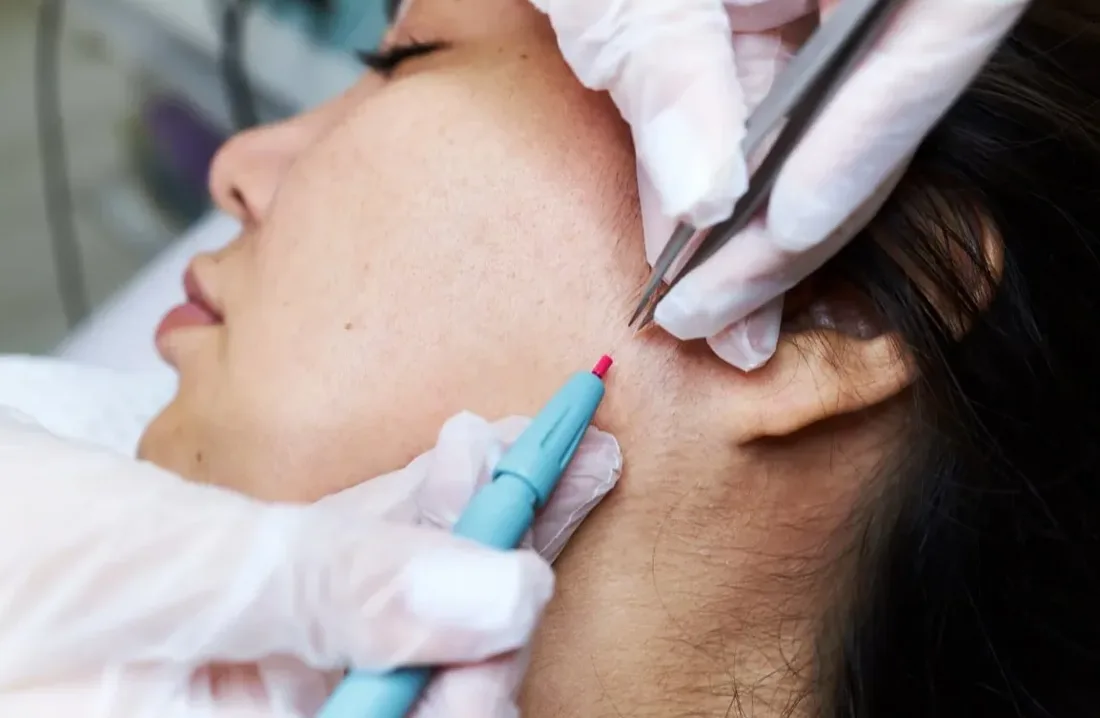
Electrolysis works differently. A fine, sterile single-use probe slides into the follicle alongside the hair, and a small amount of energy treats the follicle itself. Hair color does not matter, so gray, white, blonde and dark hairs are treated the same way. More on this is in our guide to gray and blonde hair removal.
Which hair removal options work after menopause?
Only electrolysis removes facial hair permanently regardless of color, while shaving, plucking, waxing and threading give short-term results.
| Option | How long it lasts | Works on gray hair? | Notes for mature skin |
|---|---|---|---|
| Shaving | 1 to 3 days | Yes | Gentle, but stubble can feel prickly |
| Plucking | Days to a few weeks | Yes | Can distort follicles, cause ingrowns and marks |
| Waxing and threading | 2 to 6 weeks | Yes | Can irritate thin, dry skin and lift it, so many women stop |
| Laser | Reduces dark hair for a time | Usually no | Needs pigment, light hairs stay |
| Electrolysis | Permanent for each treated follicle | Yes | Gentle settings, sessions spaced to skin recovery |
Electrolysis is the only hair removal method the FDA allows to be marketed as permanent. That does not mean one visit, since each follicle needs treatment, and hairs at different stages of growth appear over months. It does mean every follicle you finish is finished.
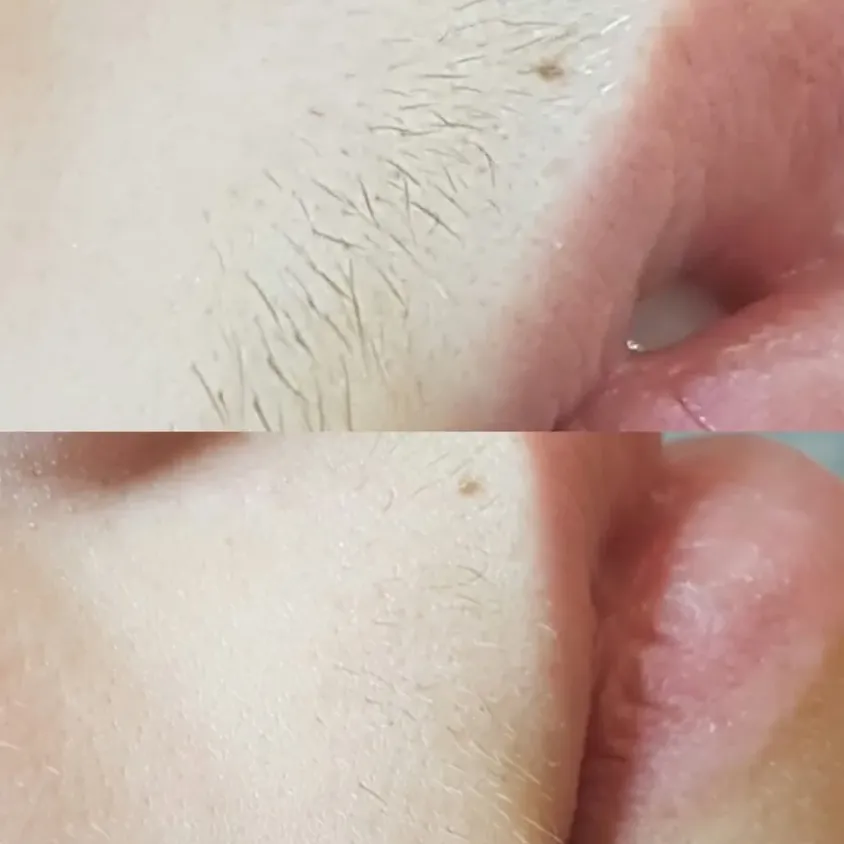
What does a treatment plan look like for chin and lip?
A typical plan for the chin or upper lip is 8 to 15 sessions over 9 to 18 months, starting weekly or every other week and spacing out as hair thins. These are typical numbers, not a promise.
Hormonal hair can take longer because new follicles may activate over time. Many clients treat the chin first, since it is usually the most visible, then add the lip and jaw. At your free consultation Aida looks at density, hair type and skin, then builds a plan around your budget and schedule.
| Area | Session | Price | 5 visits (-10%) | 10 visits (-15%) |
|---|---|---|---|---|
| Upper lip | 20 min | $50 | $225 | $425 |
| Chin | 30 min | $65 | $292.50 | $552.50 |
| Face general zone | 30 min | $75 | $337.50 | $637.50 |
| Cheeks, sideburns, neck | 45 min | $90 | $405 | $765 |
New clients get $25 off the first session, and the consultation is free. The full list is on our prices page, and the zone pages for the chin and upper lip show what a visit involves.
A rough budget helps. A chin plan of 12 visits at the list price comes to $780 before packages and the first visit discount. Spread across a year, that is about $65 a month for hair you would otherwise pluck for decades.
Is electrolysis safe for thin, mature skin?
Yes, electrolysis is safe for mature skin when the electrologist adjusts the settings and spacing for skin that is thinner, drier and slower to heal.
After menopause the skin loses some collagen and oil, so it can redden faster and show marks longer. That does not rule out treatment. It changes how we do it. We use a gentle approach, sterile single-use probes and the Apilus device, and we choose between thermolysis, galvanic or a blend based on how your skin responds. Short visits and a few extra days between them can make a real difference.
Tell us about anything that affects skin or healing before your first visit:
- Prescription skincare such as retinoids, and any oral acne medicine
- Blood thinners or other medicines that cause easy bruising
- A history of cold sores around the lip
- Rosacea, eczema or very sensitive skin
- Skin that scars or darkens easily
Most clients feel a quick warm pinch or tingle, and the area may look pink for a few hours. Aida has 20+ years of experience and has treated more than 10,000 clients, many of them women in this exact stage of life.
How should you care for mature skin between visits?
Keep the area clean, moisturized and protected from sun, and leave the hairs alone, since that is what makes the next session work.
- Do not pluck, wax or thread between visits. We need hair about 2 mm long to treat it.
- Trim with small scissors or shave lightly if hair gets long, then stop 2 days before your visit.
- Skip retinol and exfoliating acids on the area for a few days before and after.
- Wash gently with a fragrance free cleanser and apply a plain moisturizer.
- Do not pick at scabs or small crusts, which can leave marks on thin skin.
- Use SPF 30 or higher daily, since treated skin is more sensitive to the sun.
- Avoid hot tubs, saunas and heavy makeup on the treated area the first day.
For a full walkthrough of what happens after a visit, see our electrolysis aftercare guide.
Do hormone therapy and medications change facial hair?
They can, but the effect varies from person to person and the decision belongs to you and your doctor, not to your electrologist.
Some medicines change hormone levels, and others affect hair growth as a side effect. A few can add facial or body hair, and some can reduce it. We do not advise on drugs or doses, and you should never stop or change a prescribed medicine because of hair. What helps is a clear note: when the hair started, when you began any new medicine, and what has changed since. Bring it to your doctor.
Electrolysis works alongside medical care. Medical treatment may slow new growth, and electrolysis removes the hairs that are already there. Many clients find this combination gives the calmest results. If you are weighing options, our overview of unwanted facial hair in women lays out the medical and cosmetic paths side by side.
When should you see a doctor about facial hair?
See a doctor if facial hair appears suddenly, grows fast or comes with other new symptoms, because rapid change is not typical of normal menopause.
Book a medical visit if you notice any of these:
- Hair that appears within a few months and spreads quickly
- A deepening voice, or thinning scalp hair at the temples or crown
- Acne that suddenly returns, or unexplained weight changes
- Bleeding after menopause, or very irregular cycles if you are still menstruating
- Hair growth that began after starting a new medicine
Most facial hair at menopause is harmless, but your doctor is the right person to rule out anything else. Once you have an answer, electrolysis can begin or continue.
How does it feel, and what is recovery like?
Most clients describe electrolysis as a quick warm pinch or tingle at each hair, and recovery is typically a few hours of pinkness with no downtime.
Sensitivity depends on the area, the time of month if you still have periods, and how tired or stressed you are. The upper lip is usually the most sensitive spot, the chin and jaw less so. A short visit helps, and many clients plan the lip for the end of the day when they have time to rest. Mature skin can look a little pink or show tiny bumps for a few hours, and occasionally a small crust forms. Leave it alone and it heals by itself, usually within a few days.
You can go back to work and normal life right away. Skip heavy makeup on the area until the next morning, and keep sunscreen on. If something looks unusual, call the studio at (949) 444-6191.
Is it too late to start electrolysis after 60?
No, it is never too late, since electrolysis works on any follicle with hair in it, and many clients start in their 60s and 70s.
The only requirement is that hair is present and long enough to grip. Age does not close the door. What changes is the pace. Mature skin may need slightly gentler settings and a bit more recovery time between visits, and that is something we plan for. The payoff is that treated follicles stay treated, so every visit shortens the time you spend with tweezers and a magnifying mirror for the rest of your life.
What can you expect at your first visit in Irvine?
Your first visit starts with a free consultation, a look at your skin and hair, and a plan with exact prices, so you know the cost before treatment begins.
The studio is at 18021 Sky Park Circle, Suite N, Irvine, with free parking, and it is open daily from 8am to 9pm. Clients come from across Orange County, including Newport Beach, Tustin, Costa Mesa and Mission Viejo. Aida Khazieva is a licensed cosmetologist and electrologist, and she treats every client herself. You can read more about her background on the about page.
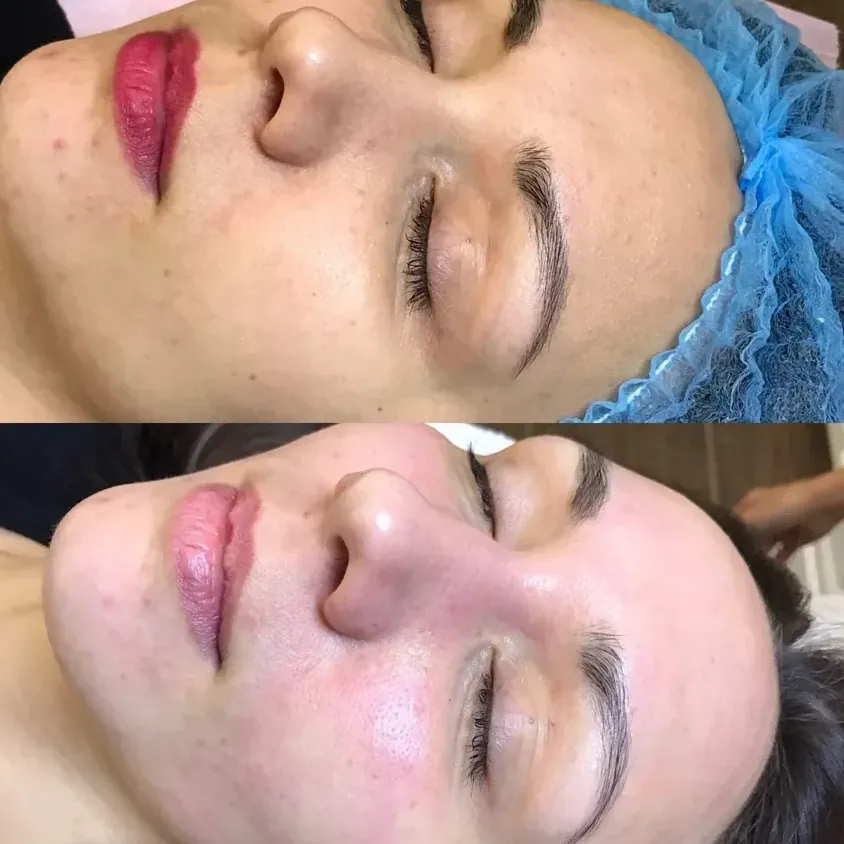
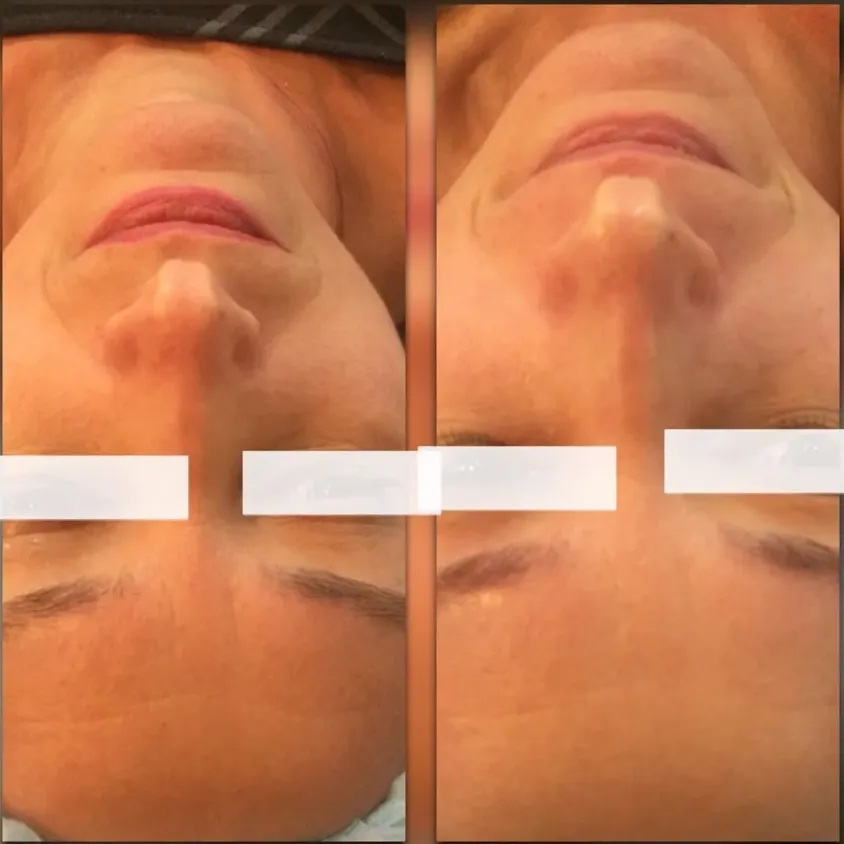
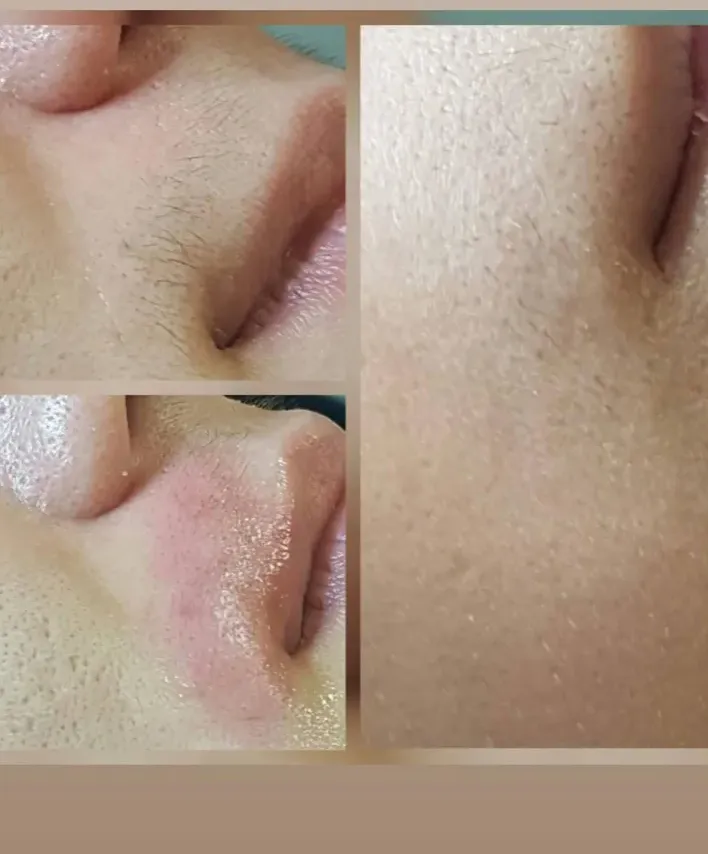
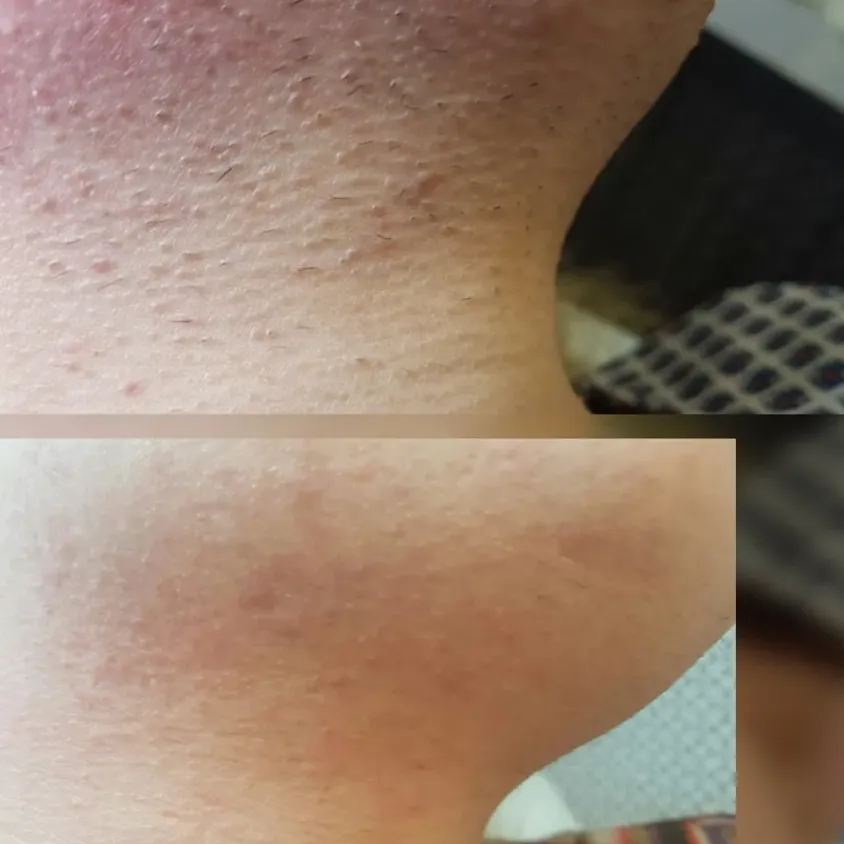
To see real results, look at our chin and neck photo below. Every client is different, and results vary.
When you are ready, book a free consultation, and bring your questions about how long, how much and how it feels.
Bottom line
Facial hair at menopause is common and usually comes from a shift in hormone balance, not from anything you did. Gray and coarse hairs are the ones laser misses and plucking never finishes. Electrolysis removes them one follicle at a time, on thin mature skin too. Book a free consultation in Irvine, and see your doctor first if growth is sudden or fast.
Questions
Does menopause cause facial hair?
Yes, it is a very common change. As estrogen declines, androgens have more influence on facial follicles, so hair can become thicker, darker or more noticeable on the chin, lip and jaw. It is usually part of the hormonal transition, and a doctor can check if anything else is going on.
Why is my facial hair gray or wiry?
Follicles lose pigment with age, so new hairs often come in gray or white, and androgen sensitivity can make them stiff and wiry. The change is gradual. You may also have a mix of fine light hairs and a few coarse dark ones.
Does laser work for facial hair after 50?
Laser usually does not work well on gray, white or very light hair, because it needs pigment to absorb the light. Dark hairs may respond, but the gray ones around them stay. Electrolysis does not depend on color.
Is electrolysis safe on thin, mature skin?
Yes, when done by a trained electrologist who adjusts the settings. Thin skin can redden or mark more easily, so we use a gentle approach, sterile single-use probes and good aftercare. Tell us about any prescription skincare or medication.
Will the hair come back after menopause treatment?
A treated follicle does not regrow hair. However, hormones can wake up new follicles over time, so some women need occasional touch ups. Electrolysis is the only hair removal method the FDA allows to be marketed as permanent.
How many sessions will I need?
Typically 8 to 15 sessions over 9 to 18 months for a small facial area such as the chin or lip. Hormonal hair can take longer, and results vary. We map a plan at your free consultation.
Does hormone therapy change facial hair?
Medications can affect hair growth in different ways, and the effect varies from person to person. Never start or stop a prescribed medicine because of hair. Ask your doctor, and electrolysis can work alongside whatever plan you choose.
How much does it cost in Irvine?
Upper lip is $50 for 20 minutes, chin is $65 for 30 minutes and the face general zone is $75 for 30 minutes. New clients save $25 on the first session, and packages take 10% or 15% off.
Sources
- Cleveland Clinic. Electrolysis
- U.S. Code of Federal Regulations (FDA). 21 CFR 878.5350: Needle-type epilator
- American Academy of Dermatology. Laser hair removal: Overview
- Cleveland Clinic. Laser hair removal
- Cleveland Clinic. Hirsutism
- Mayo Clinic. Hirsutism
This article is general information about cosmetic treatments, not medical advice. For a skin or hormonal condition, talk to your doctor or dermatologist.