Electrolysis results build visit by visit: hair clears, regrowth comes in finer and sparser, then stops. Many clients see a change within two or three months. A small facial area typically takes 8 to 15 sessions over 9 to 18 months, and results vary. The photos below are real clients from our Irvine studio.
Key facts
| Photos | Real clients at our Irvine studio, no stock images |
|---|---|
| First visible change | Often within the first two or three months |
| Typical course | 8 to 15 sessions over 9 to 18 months for a small facial area, results vary |
| Visit frequency | Weekly or every other week at first, then spaced out |
| Result | Permanent: the only hair removal method the FDA allows to be marketed as permanent |
| Works on | All skin tones and hair colors |
| Factors | Hair type, hormones, past hair removal, consistency |
| New clients | Free consultation, $25 off the first session |
What do real electrolysis results look like?
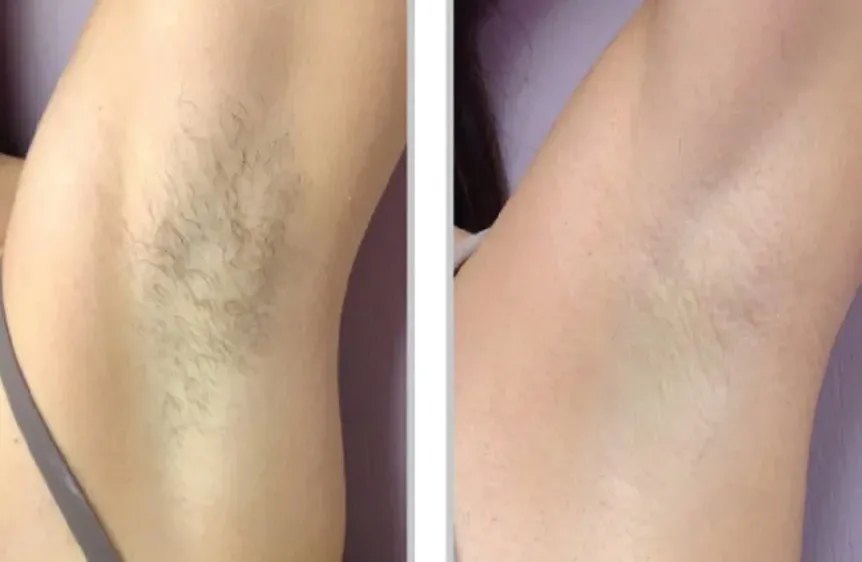
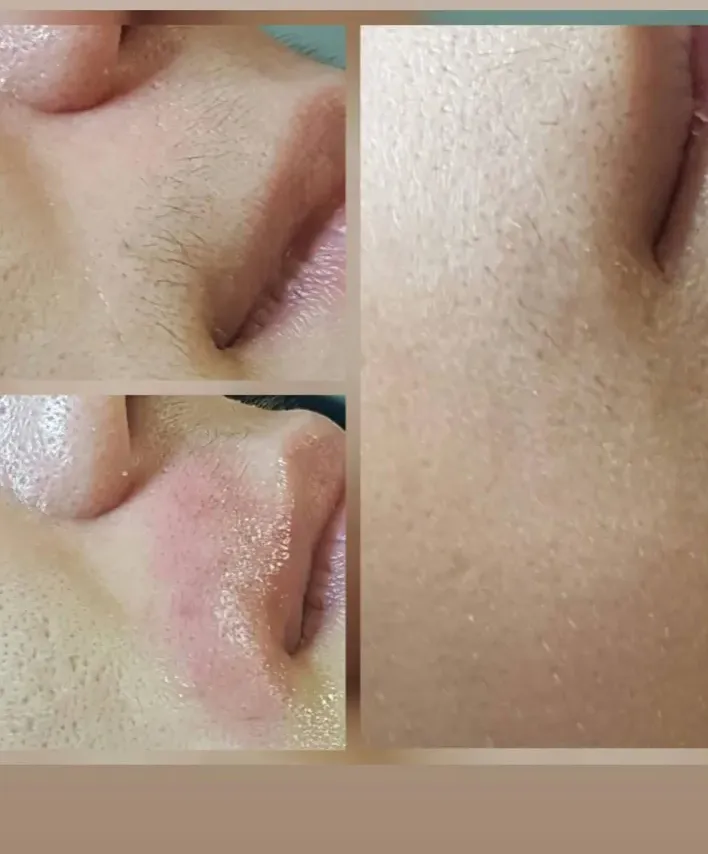
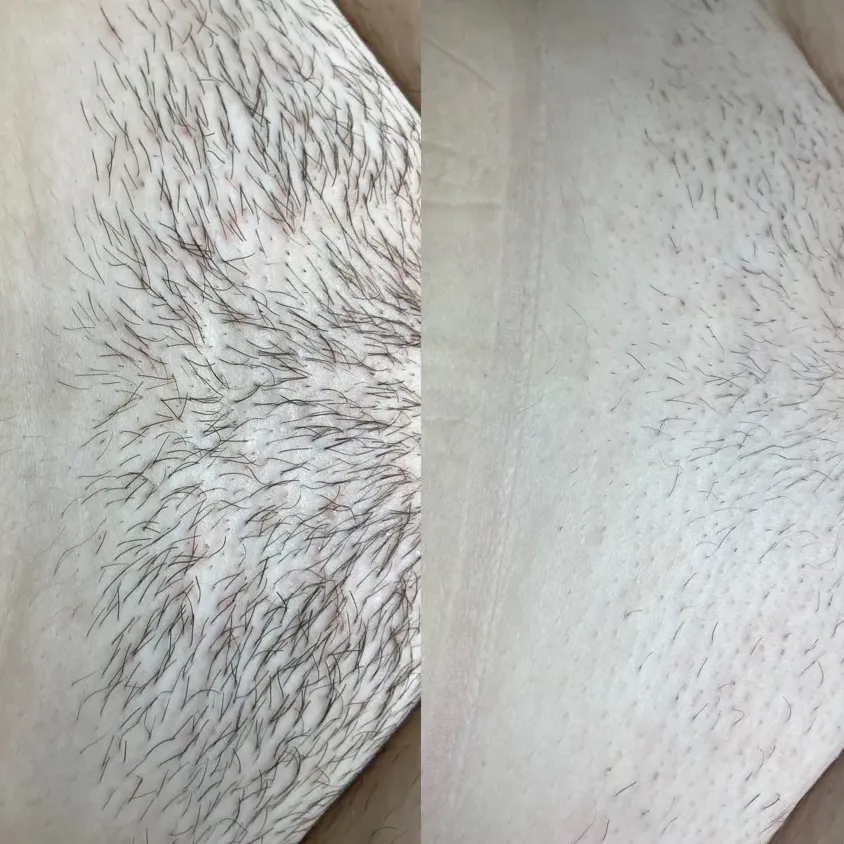
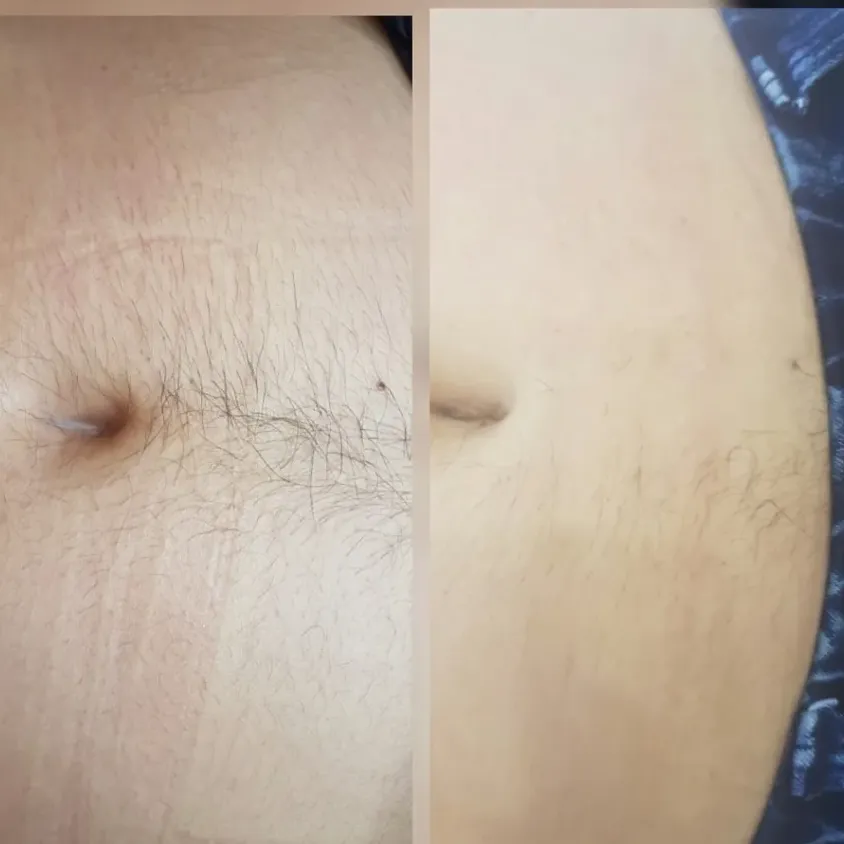
They look like fewer hairs, softer hairs and then smooth skin where there used to be a daily shave. The photos here come from our own studio, and each one is labeled by area only.
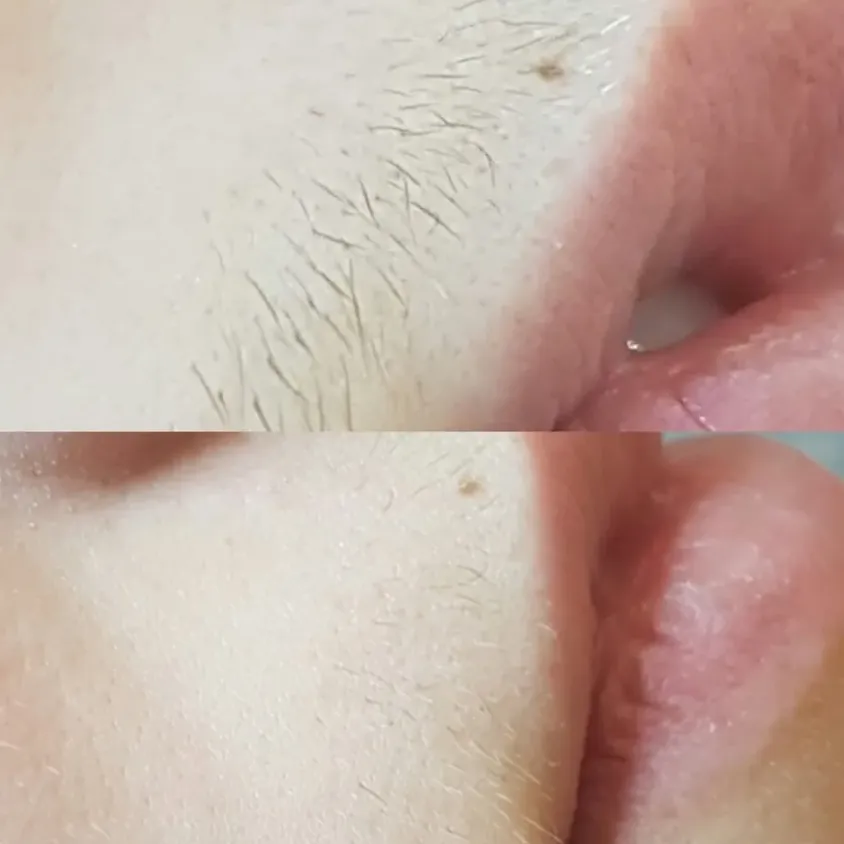
We do not print session counts under the photos. Session numbers vary from person to person, and quoting one would suggest a promise we cannot make. Your own plan depends on your hair, your hormones and your history, and we give you an estimate at your free consultation.
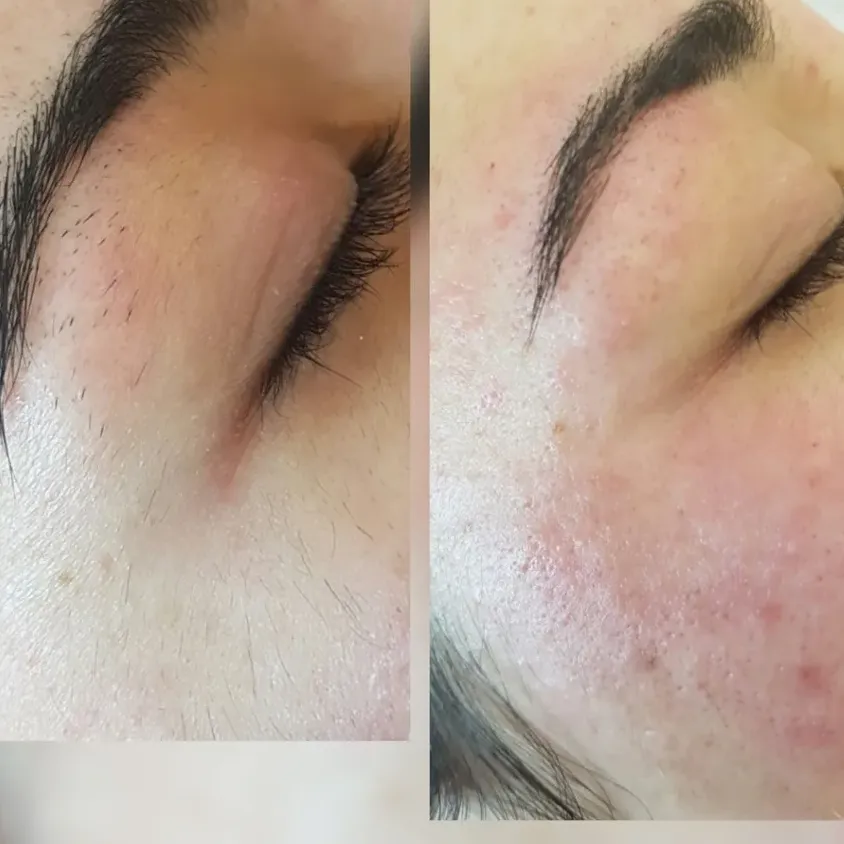
Expert tip from Aida KhazievaHair can look worse before it looks better, because treated hairs that were hiding start to show. Keep tweezing and waxing off the area so the plan can work.
Licensed cosmetologist and electrologist, 20+ years
What changes from visit to visit?
A typical course moves through four phases, and the early weeks are the busiest. The pattern below describes what many clients notice, not a guarantee.
| Phase | What you see | Typical timing |
|---|---|---|
| Clearing | Many hairs treated, skin may look pink and bumpy for hours | Visits 1 to 4 |
| Thinning | Fewer hairs appear, regrowth looks finer and lighter | Months 2 to 6 |
| Sparse growth | Isolated hairs, longer gaps between needed visits | Months 6 to 12 |
| Finishing | A few late hairs picked up, then none | Months 9 to 18 |
A typical pattern, not a promise. Aida adjusts the plan to how your hair responds.
Notice that the first phase can look worse before it looks better. Hairs that were hiding under the surface are suddenly visible because you are treating them. That is a sign the plan is working, not a setback.
Why does some hair come back between visits?
Hair comes back because follicles move through growth stages, and only some are active on any given day. A hair that was not visible at your last visit can surface a few weeks later.
Electrolysis treats the follicle that has a hair in it. The next group appears in time and gets its turn. This is why visits begin weekly or every other week, to catch each wave. As the waves thin out, visits space out to every three or four weeks and then longer. Treated follicles do not grow again. The FDA allows electrolysis to be marketed as permanent hair removal, and it is the only method with that standing.
What affects how fast you see results?
Four things matter most: hair type, hormones, past hair removal and how regularly you come in.
- Hair type. Fine vellus hair often clears faster than thick, dark hair.
- Hormones. PCOS and menopause keep waking new follicles, so the plan runs longer. See PCOS facial hair.
- Past hair removal. Years of waxing, plucking or laser can leave distorted follicles. Read switching from laser to electrolysis.
- Consistency. Regular early visits shorten the total time.
Keep hair present between visits, which means trimming or shaving rather than waxing or plucking. The probe follows the hair to the root, so it has to be there.
What do results look like in different areas?
Each area has its own rhythm, because hair density, skin thickness and growth cycles differ.
Face
Upper lip, chin and cheeks are the most photographed and the most visible. Typically 8 to 15 sessions for a small area.
Underarms
Hair is dense and growth is mixed, so visits run longer but each shave-free week adds up.
Legs and body
Large areas are done in sections over many visits, which spreads the plan out.
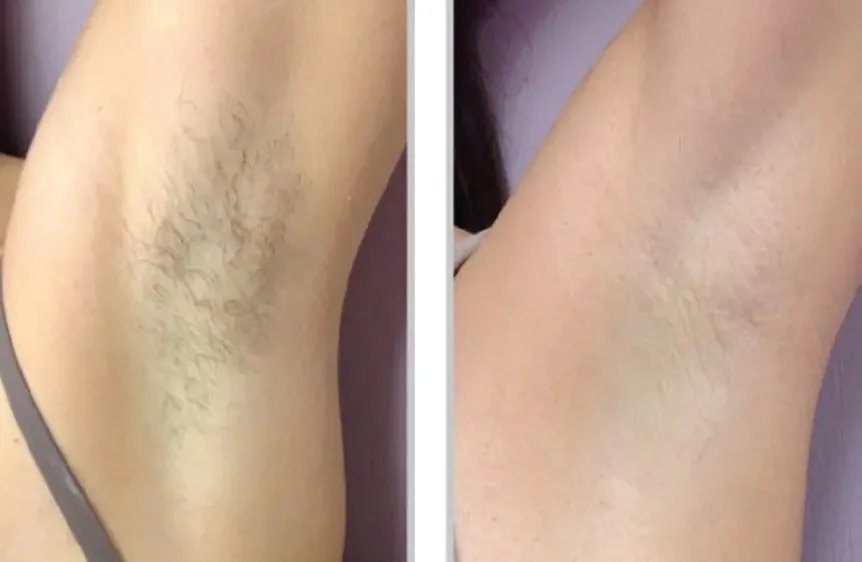
Skin results matter too. Ingrown hairs and razor bumps often calm down as the follicles are treated. See the electrolysis hub for areas and methods.
How much does a course cost?
Sessions are priced by area and time, so your total depends on how long your plan runs. Packages bring the price down.
| Area | Time | Price |
|---|---|---|
| Upper lip | 20 min | $50 |
| Chin | 30 min | $65 |
| Cheek, neck, underarm | 45 min | $90 |
| Leg | 60 min | $150 |
First-time clients take $25 off. Packages save 10% on 5 visits and 15% on 10 visits. The full list is on the prices page.
Which photos show what, and how should you read them?
Read each photo as a snapshot of one person's course, not a forecast for yours. Lighting, angle and hair length all affect how a result looks.
| Photo | Area | What to look for |
|---|---|---|
| Upper lip and chin | Face | Fewer visible hairs, smoother shadow along the lip line |
| Cheek | Face | Reduced fine hair, even skin tone |
| Underarm | Body | Less regrowth and calmer skin |
| Legs and ingrown hairs | Body | Fewer ingrowns and bumps |
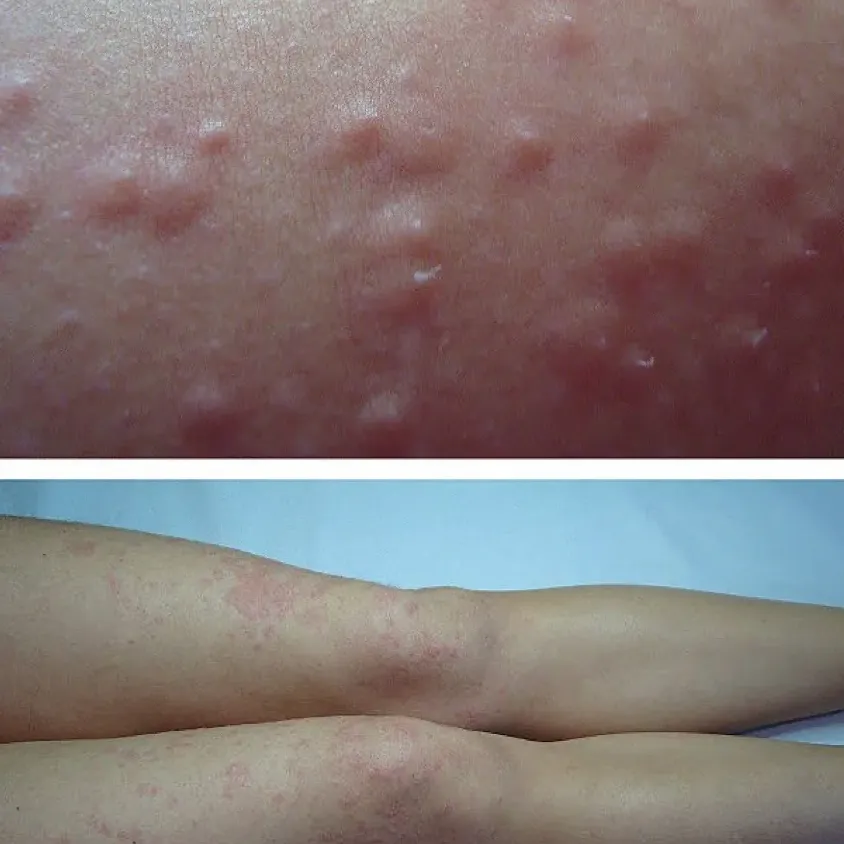
Compare the same spot in both frames. Look at the density of hair, its thickness and the skin around it. Do not compare the photos of two different people, because hair type, hormones and history shape every course differently.
Is anything normal that looks bad at first?
Yes, a few things look worse before they look better, and they are normal. Knowing them saves worry.
- Pink skin and tiny bumps. They appear within minutes and fade in a few hours.
- Small scabs. They form on some visits and heal by themselves in a few days.
- Hairs that seem to multiply. You are seeing hairs that were hidden, now that the surface ones are gone.
- Uneven progress. One side may clear before the other, because follicles cycle on their own schedule.
Things that are not normal include spreading redness, heat, pus or pain that increases after a day. Call us if you notice them. We want to hear from you.
How do you keep results after the course?
Treated follicles do not grow back, so there is little to keep up on those areas. What remains is watching for new hairs that hormones or age can bring.
Many clients return once or twice a year for a short touch-up visit, especially on the chin and upper lip. Others never return. If your hair is hormonal, such as with PCOS or menopause, talk with your doctor and plan an occasional check. Meanwhile, keep skin protected with sunscreen and treat it gently.
| After the course | What to do |
|---|---|
| No new hair | Nothing, enjoy the result |
| A few late hairs | Book a short visit |
| Hormonal changes bring new hair | See your doctor, then plan targeted visits |
What does a typical consultation show you before you begin?
A consultation shows you where you are today, which is the baseline for every later comparison. Aida Khazieva looks at hair density, thickness, color and growth pattern, and at your skin.
She may take a photo with your permission so you can compare later. Photos help you see change that is easy to miss in a mirror, since you look at your face every day. Bring your questions. The talk takes 15 minutes, costs nothing, and ends with a personal estimate.
- Bring your hair removal history, including laser and waxing
- Mention medications and any hormonal diagnosis
- Come with the hair at 1 to 2 mm if you wish to start the same day
- Ask for the plan in phases, so you can see where the milestones are
- Decide on a standing weekly slot for the first months
Do results look the same on every skin tone and hair color?
The method works the same way on every skin tone and hair color, because electrolysis does not depend on pigment. The probe treats the follicle, whatever the hair looks like above it.
That is why gray, blonde and red hair are good candidates, and why dark skin is safe. Visits are timed to the hair, not to the color of the skin. See gray and blonde hair removal if light hair is your concern. If you want to see how a course fits before an event, our Irvine guide to electrolysis covers the practical side.
How do you take your own progress photos?
Take them in the same spot, the same light and the same angle every few weeks. Consistent photos show change that you would miss in the mirror.
- Use daylight near a window, with no flash
- Keep the hair at the same length each time, ideally 1 to 2 mm
- Photograph before a session, not right after, when the skin is pink
- Take a straight-on shot and a side shot of the area
- Date the files so you can compare month to month
Look at the photos together with your electrologist. She can point out thinning, finer regrowth and healed skin, and adjust visit spacing as the density falls. A photo series also helps you decide when to move from every other week to every three or four weeks.
| Check point | Compare |
|---|---|
| Month 1 | Baseline to first visits |
| Month 3 | Density and hair thickness |
| Month 6 | Gaps between needed visits |
| Month 12 | Remaining isolated hairs |
Are the results better with certain methods?
The method is chosen to fit the hair, not to chase a better look. Aida Khazieva uses thermolysis, galvanic or blend on an Apilus device, and she may switch within a single session depending on the hair and the skin.
Thermolysis uses heat and works fast on many hairs. Galvanic uses a chemical reaction and suits curved or stubborn follicles. Blend combines both for hairs that need more. Sterile single-use probes are opened for each client in every case.
How can you start?
Start with the free 15-minute consultation, where Aida Khazieva looks at your skin and hair and gives you a personal estimate. She is a licensed cosmetologist and electrologist with 20+ years of experience and 10,000+ clients, and she works with thermolysis, galvanic or blend on an Apilus device with sterile single-use probes.
We are at 18021 Sky Park Circle, Suite N, Irvine, CA 92614, open daily from 8am to 9pm, with free parking. Call (949) 444-6191 or book online. Planning around a date? Try our month-by-month wedding plan.
Results vary by person. Photos show real clients at our studio. Electrolysis is performed by a licensed professional, and an individual estimate is given at your consultation.
Bottom line
Electrolysis results build visit by visit: hair clears, grows back finer and sparser, and then stops. The photos here are real clients from our studio, shown by area only, and your own timeline will vary. Book a free consultation for a personal estimate.
Questions
How soon will I see results from electrolysis?
Many clients notice a change within the first two or three months. Some treated hairs do not return, and the ones that do come back thinner.
Why does some hair grow back between visits?
Hairs are in different growth stages. Those that were not visible at your visit show up later, and they are treated on the next pass.
Are these photos of real clients?
Yes. The photos are from our own studio and are shown without edits to the results. We caption them by area only, because every course is different.
Why don't you list session counts under each photo?
Because counts differ from person to person and would not predict your result. We give you a personal estimate at the consultation.
Will the skin look red right after a session?
Mild redness for a few hours is normal. Most clients carry on with their day.
Does electrolysis leave scars?
When done properly by a trained electrologist, scarring is uncommon. Do not pick or scratch the area, and follow the aftercare.
What can slow down my results?
Hormones, plucking or waxing between visits, and missed appointments. Following the plan keeps the course shorter.
Is the result really permanent?
Treated follicles do not grow back. The FDA allows electrolysis to be marketed as permanent hair removal. New hairs from hormonal changes may need later treatment.
Sources
- Cleveland Clinic. Electrolysis
- U.S. Code of Federal Regulations (FDA). 21 CFR 878.5350: Needle-type epilator
- Cleveland Clinic. Ingrown hair
- American Academy of Dermatology. Razor bump remedies
This article is general information about cosmetic treatments, not medical advice. For a skin or hormonal condition, talk to your doctor or dermatologist.