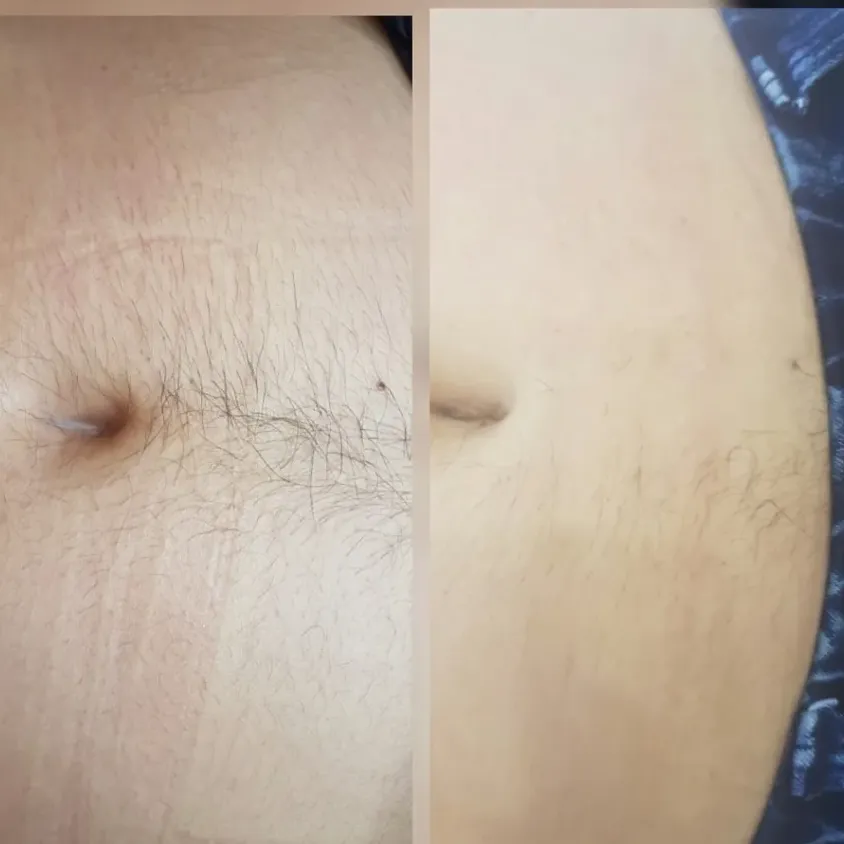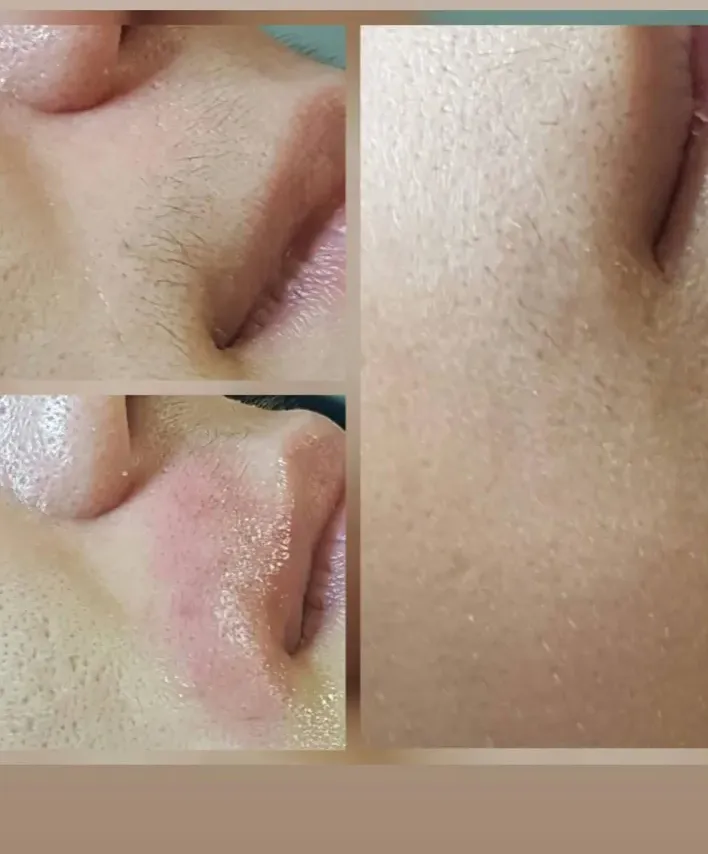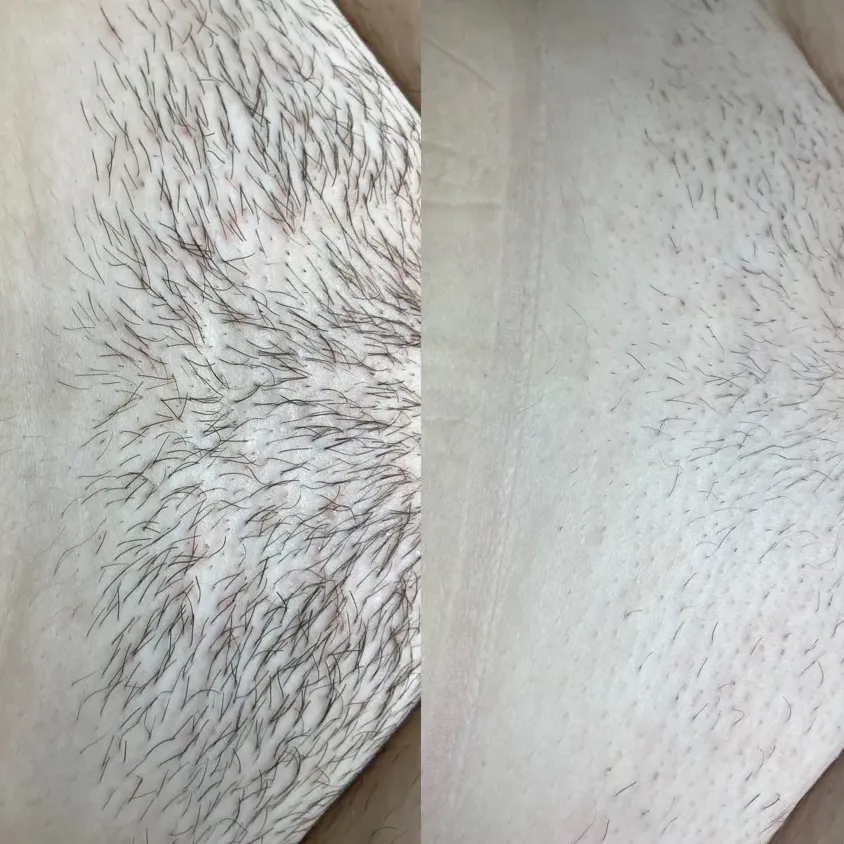
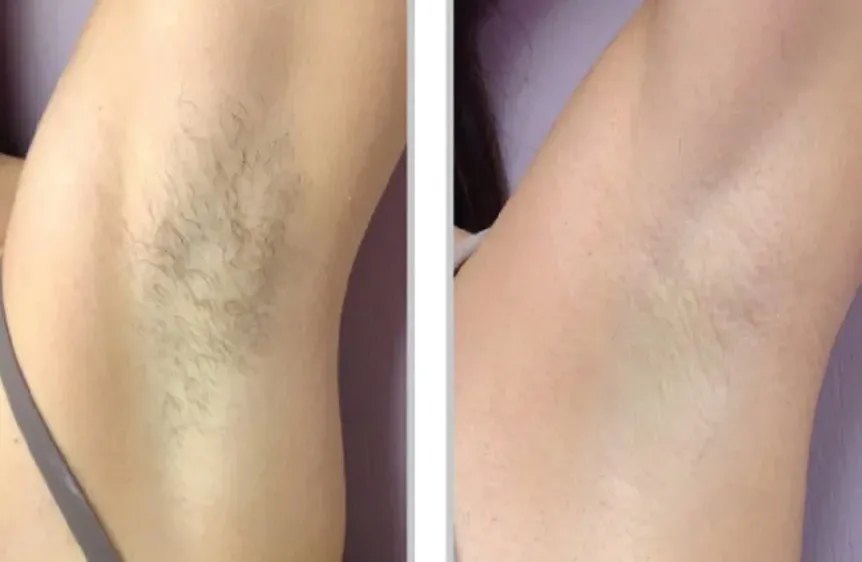
Paradoxical hair growth is when laser or IPL leaves you with more, darker or coarser hair in or around the zone that was treated. It is uncommon and shows up mostly on the jaw, chin, cheeks and neck. Repeating the same laser rarely fixes it. Electrolysis treats each follicle directly, from $65 for the chin in Irvine.
Key facts
| What it is | New, darker or coarser hair in or near an area treated with laser or IPL |
|---|---|
| Where it shows up | Most often the face and neck: jawline, chin, cheeks, sideburns |
| Who is more prone | Darker skin tones, dark hair, hormonal conditions such as PCOS |
| Why more laser is a gamble | Low or uneven heat may be what woke the fine hairs up |
| What clears it | Electrolysis, one follicle at a time, on any hair color or skin tone |
| Prices in Irvine | Chin $65, face zone $75, cheek or neck $90, PCOS session $110 |
| New clients | Free consultation, $25 off the first session |
What is paradoxical hair growth after laser?
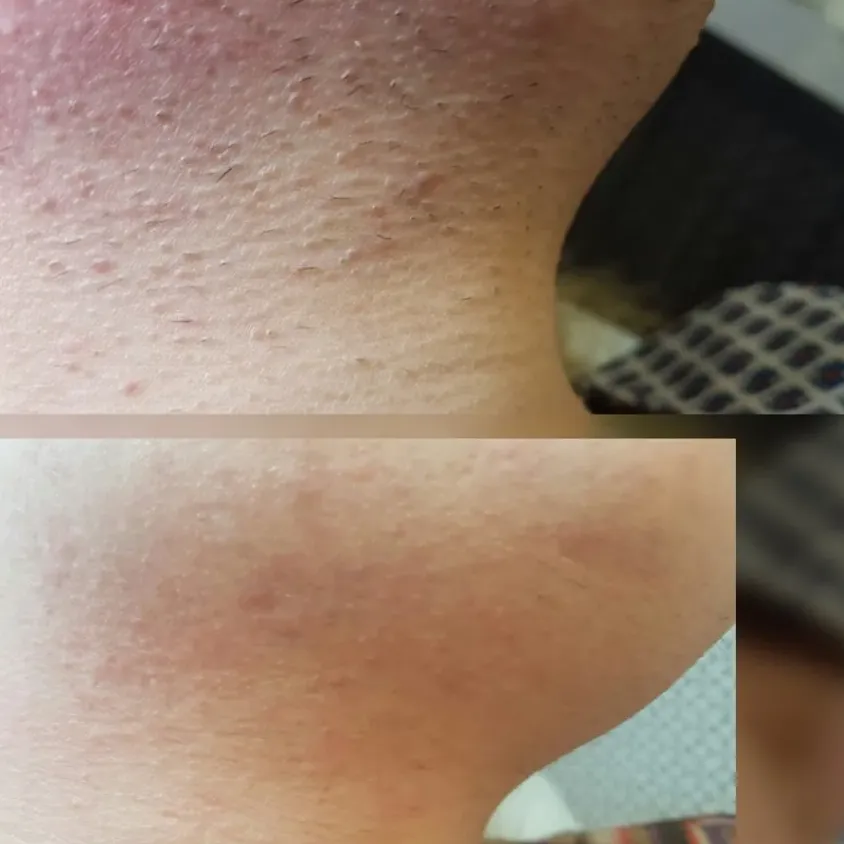
Paradoxical hair growth, called paradoxical hypertrichosis in medical writing, is new or thicker hair that appears where laser or IPL was supposed to remove it.
The pattern is easy to recognize once you know it. You start laser on your chin or jaw, the first sessions seem to thin the dark hairs, and then a few months in you notice something odd: the soft, nearly invisible fuzz around the treated zone is turning into real hair. It looks darker, feels coarser, and sometimes covers more skin than the original problem did.
Three features set it apart from ordinary regrowth:
- The hair appears in or right next to the area that was treated, often along the edges.
- Hairs that used to be vellus (fine, light, short) become terminal (dark, thick, longer).
- It develops during or after a course of laser, not before you started.
It is not a sign that you did anything wrong. It is a known side effect, described in dermatology literature for years, and most laser consent forms mention it in small print.
Expert tip from Aida KhazievaWhen a client comes to me after laser with thicker hair on the jaw, I first look at what grew in and where, then we treat the coarsest hairs first so the change is visible quickly.
Licensed cosmetologist and electrologist, 20+ years
Why does laser sometimes make hair grow thicker?
Nobody knows the exact mechanism, but the leading explanation is that heat too low to destroy a follicle can instead stimulate it.
Laser works by aiming light at pigment in the hair. The pigment absorbs the light, turns it into heat, and that heat is meant to damage the follicle. Fine, light hairs carry little pigment, so they absorb little energy. The current thinking is that the edges of the beam, or a setting chosen to protect darker skin, may deliver just enough warmth to wake these sleepy follicles up rather than shut them down.
Other ideas researchers have raised include:
- Inflammation from repeated treatments sending growth signals to nearby follicles
- Follicles that were already primed by hormones reacting to the extra heat
- Scattered light reaching skin just outside the treated zone
What matters for you is the practical takeaway: if low or uneven heat is part of the cause, more of the same laser may feed the problem.
Who is more likely to get paradoxical hair growth?
People with darker skin tones, dark hair and an underlying hormonal tendency are reported to be more prone, especially when the face or neck is treated.
| Factor | Why it may raise the chance |
|---|---|
| Medium to dark skin tone | Settings are often lowered to protect the skin, so fine hairs get less heat |
| Dark hair with fine fuzz around it | Coarse hairs absorb energy, fine neighbors only get warmed |
| Face and neck | Follicles here respond strongly to hormones and heat |
| PCOS or other hormone conditions | Follicles are already primed to turn fine hair into coarse hair |
| Hormonal shifts during treatment | Pregnancy, perimenopause or new medication can change growth patterns |
None of these means you will get it. Most people who have laser never do. But if you have several of these factors and you are still considering laser on your face, it is worth knowing before you sign up for a long package.
Is it paradoxical growth or just normal regrowth?
True paradoxical growth means hair that was fine became coarse, while normal regrowth means the same kind of hair simply came back.
Laser reduces hair for many people, but it was never cleared to be called permanent removal, and some hair returning over time is expected. Before you decide what happened, compare honestly:
| What you see | More likely |
|---|---|
| Same dark hairs as before, just fewer of them | Normal partial regrowth after laser |
| Soft fuzz turned into dark, wiry hairs along the treated edge | Paradoxical growth |
| Patchy spots with no hair next to spots with full hair | Uneven coverage during sessions |
| New hair on areas never treated, plus other changes in your body | Possible hormone change, see your doctor |
| Gray, white or blonde hairs left behind | Hair laser cannot target |
Photos help. If you took pictures before laser, compare them with what you see now in the same light. Many clients bring phone photos to the consultation, and it makes the conversation much clearer.
Should you keep going with laser or stop?
For most people with paradoxical growth, stopping laser on that area is the safer choice, and the decision is worth discussing with whoever did your treatments.
Some clinics suggest raising the energy or switching wavelengths to catch the new hairs. That can work for some people, yet it can also raise the risk of burns and pigment changes on darker skin, and the fine hairs around the new ones remain a target for the same stimulation. There is no guaranteed laser setting that undoes the effect.
If you have read our guide to moving from laser to electrolysis, the timing advice there applies here too: you do not need to wait months after your last laser session to start electrolysis, as long as the skin has fully calmed.
How does electrolysis clear hair that laser stimulated?
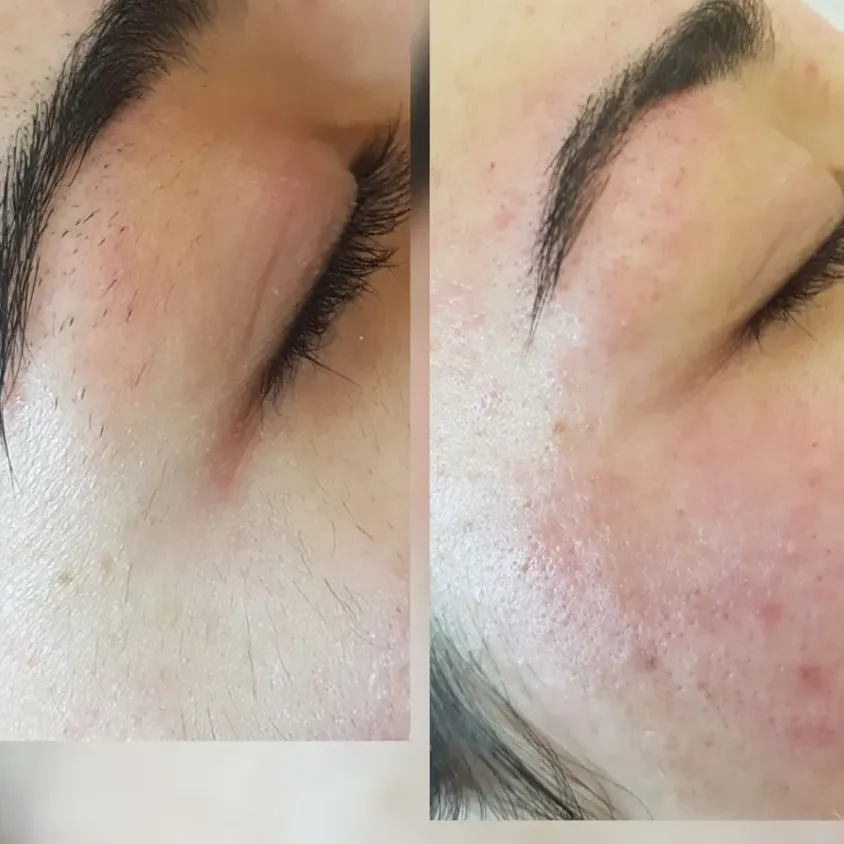
Electrolysis clears it by treating each follicle on its own with a sterile probe, so it does not rely on pigment and cannot "warm up" the hairs around it the way a broad beam can.
A very fine, single-use probe slides into the natural opening of the follicle, alongside the hair. A small, controlled current is delivered right at the base, where hair is produced. The loosened hair lifts out with no pulling. Over a series of visits, each treated follicle loses its ability to make a new hair. Electrolysis is the only hair removal method the FDA allows to be marketed as permanent.
For laser-stimulated hair this has three practical advantages:
- It works on every hair, whether dark, light, fine or coarse, so the mixed fuzz and wiry hairs left after laser are all treatable.
- It works on every skin tone, because the energy goes into the follicle, not into skin pigment.
- It is precise. The electrologist chooses which hairs to treat first, so you can see the most obvious ones disappear early.
At our Irvine studio, Aida uses an Apilus device and chooses between thermolysis, galvanic and blend depending on hair type. Coarse, deep hairs on the jaw often do well with blend. You can read more about the three electrolysis methods and how they differ.
What does an electrolysis plan look like after laser?
A typical plan starts with frequent visits to clear the coarsest hairs, then spaces out as fewer hairs come back.
| Phase | Visit rhythm | What happens |
|---|---|---|
| Weeks 1 to 8 | Weekly or every other week | Darkest, most visible hairs treated first; regrowth from hairs in other growth stages appears |
| Months 3 to 6 | Every 2 to 3 weeks | Fewer hairs per visit, finer regrowth, shorter sessions for many clients |
| Months 6 to 12 | Every 3 to 6 weeks | Clean-up of stragglers and late-cycle hairs |
| After that | As needed | Occasional check visits, more often if hormones are involved |
Typical, not a promise. Dense growth or hormone conditions take longer.
A small facial area typically takes 8 to 15 sessions over 9 to 18 months. If the new hair is driven by PCOS or another hormone condition, expect a longer course and treatment that works best alongside your doctor's care. Our page on PCOS facial hair explains how that plan differs, and how many electrolysis sessions you need covers counts by area.
What does it cost to fix paradoxical growth in Irvine?
Sessions are priced by area and time, starting at $50 for the upper lip and $65 for the chin.
| Area | Price | Session length |
|---|---|---|
| Upper lip | $50 | 20 min |
| Chin | $65 | 30 min |
| Face, general zone | $75 | 30 min |
| Cheek or neck | $90 | 45 min |
| PCOS session | $110 | 60 min |
New clients get a free consultation and $25 off the first session. A 5-visit package saves 10% and a 10-visit package saves 15%, which helps during the weekly phase. Full details are on our prices page.
What happens at the first visit after laser?
The first visit is a conversation and a close look at the skin before any hair is treated, and it is free.
Aida checks the area under magnification and sorts what she sees into groups: hairs that survived laser untouched, fine hairs that turned coarse, patchy zones and any light or gray hairs. That map decides where to start. Most clients want the darkest hairs along the jaw or chin gone first, because they are the ones that show in daylight and on video calls.
She also asks a few health questions. Electrolysis is not done on anyone with a pacemaker or an implanted defibrillator. If you are pregnant, treatment is only possible with a written note from your doctor. If your skin tends to mark easily, a small test area comes first so you both see how it heals before a full session.
Expect to talk through:
- When your last laser or IPL session was and how many you had
- Whether the skin still feels warm, sensitive or dry
- Any hormone diagnosis, birth control or medication changes
- How often you can come during the first two months
- Which package, if any, makes sense for your area
You leave with a realistic plan and a price, not a sales pitch. If laser on another body area is working well for you, there is no need to stop it there.
What should you avoid while you wait to start?
Avoid anything that pulls hair from the root or irritates the follicles, because both make electrolysis harder.
- Stop tweezing and waxing 2 to 3 weeks before your first visit, so the hairs are present and the follicles are intact (the exact timing is individual).
- Trim with small scissors or shave lightly if you need to look smooth.
- Skip more laser or IPL sessions on the same area.
- Do not try at-home needle or tweezer devices; they can scar the skin.
- Keep the skin calm: no harsh scrubs or new strong acids before your visit.
- Use sunscreen daily, since sun-irritated skin needs extra time before treatment.
Tweezing feels like control, but each pull can bend the follicle and make the next hair harder to treat. Our article on plucking chin hair explains why in more detail.
Can paradoxical growth be prevented next time?
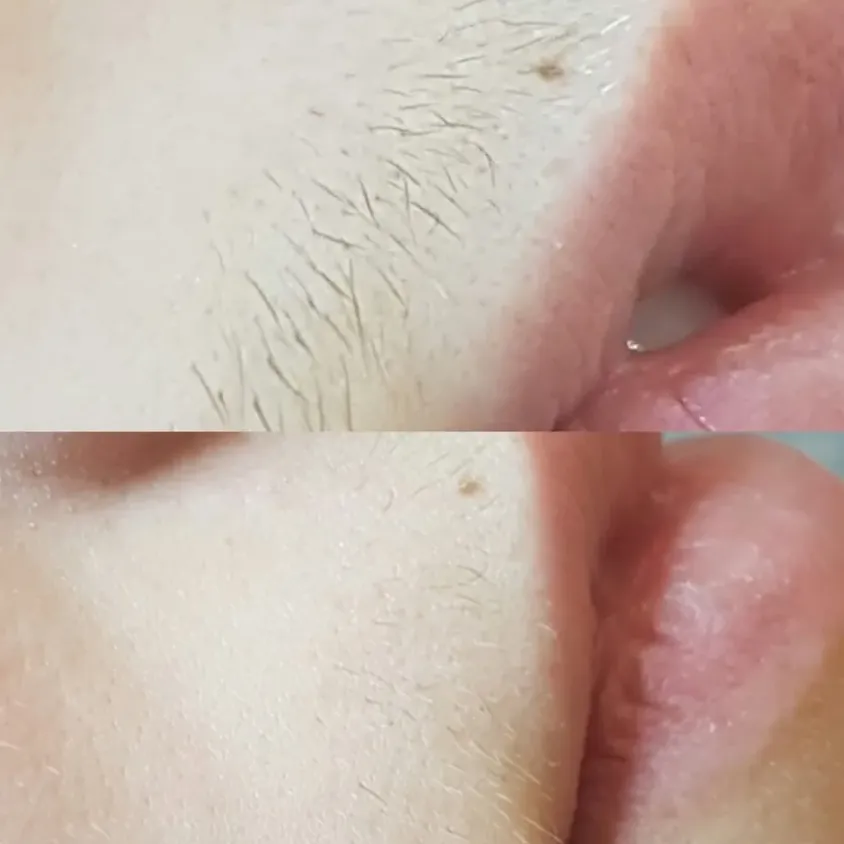
There is no sure way to prevent it, but you can lower the odds by choosing the right method for your hair and skin from the start.
If your facial hair is a mix of a few coarse hairs and lots of fine fuzz, or you have a hormonal condition, laser on the face may not be the best first choice. Electrolysis takes more visits per hair, yet it treats only what you want removed and leaves the fine hairs around it alone. For gray, white, red or blonde hair it is the only real option, which our gray and blonde hair removal page covers.
If you do choose laser for a body area, a few habits help:
- Tell the provider about PCOS, hormone treatment or medication changes.
- Ask how they handle fine hair at the edges of the treated zone.
- Take dated photos before the first session and every few sessions.
- Stop and ask questions as soon as fuzz starts darkening.
For a full side-by-side of results, cost and who each method suits, see electrolysis vs laser.
When is new hair a sign to see a doctor?
See a doctor when new hair growth is sudden, spreads to new areas or comes with other body changes, because that points to hormones rather than laser.
Paradoxical growth stays close to the treated area. Growth that appears on the chest, stomach or back at the same time, or that comes with irregular periods, new acne, scalp thinning or a deeper voice, deserves a medical check. A doctor decides on testing and treatment. Electrolysis works alongside that care: it removes the hairs that are already there while your doctor addresses the cause.
Aida has more than 20 years of experience and has worked with over 10,000 clients, many of whom came after laser did not give them what they hoped. You will find the studio on Sky Park Circle in Irvine (18021, Suite N), open daily from 8am to 9pm, and the first consultation is free.
Bottom line
Paradoxical hair growth is real, uncommon and frustrating: laser leaves you with more or darker hair in the very area you paid to clear. Repeating the same laser often does not fix it, while electrolysis treats each follicle directly and does not depend on pigment. A free consultation in Irvine gives you an honest map of what is left and what it costs to finish.
Questions
Can laser hair removal cause more hair to grow?
Yes, in a small minority of people. It is called paradoxical hypertrichosis: fine hairs in or near the treated area turn darker and thicker after laser or IPL sessions. It is most often reported on the face and neck.
How long after laser does paradoxical hair growth appear?
It usually becomes noticeable after several sessions rather than after the first one. Many people notice it when they expect results and instead see more dark hair along the jaw or neck.
Will paradoxical hair growth go away on its own?
It may soften in some people, but many find the new hairs stay. Hair that has become coarse and dark tends to behave like any other terminal hair, so waiting is not a reliable plan.
Should I keep doing laser if I have paradoxical growth?
Most people are better off stopping laser on that area and talking to a professional. Repeating low or uneven heat may keep stimulating the fine hairs instead of disabling them.
Can electrolysis cause paradoxical hypertrichosis?
Paradoxical growth is described as a laser and IPL side effect. Electrolysis works with a fine probe inside each follicle and does not spread light energy across the skin, so it is the usual way to clear this hair.
Does electrolysis work on hair left after laser?
Yes. Electrolysis works on any hair color, including the light, fine or patchy hair that laser struggles with. Each follicle is treated individually, so the result does not depend on pigment.
How many electrolysis sessions will I need after laser?
It depends on how many hairs grew in and how coarse they are. A small facial area typically takes 8 to 15 sessions over 9 to 18 months, and hormonal growth can take longer. This is typical, not a promise.
How much does it cost in Irvine?
Sessions are priced by area: chin $65, face zone $75, cheek or neck $90, PCOS session $110. New clients get $25 off the first session, and packages save 10% or 15%.
Sources
- Cleveland Clinic. Electrolysis
- U.S. Code of Federal Regulations (FDA). 21 CFR 878.5350: Needle-type epilator
- American Academy of Dermatology. Laser hair removal: Overview
- Cleveland Clinic. Laser hair removal
This article is general information about cosmetic treatments, not medical advice. For a skin or hormonal condition, talk to your doctor or dermatologist.